skip to main |
skip to sidebar

 No arrows needed.
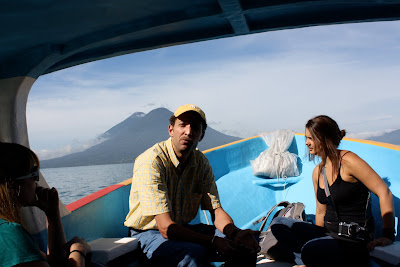 We arrived at Lake Atitlan yesterday, and started working with the artisans in the villages today. On our boat ride over to San Pedro, Cameron - our guide at that point - was telling us a little bit about the Lake.
Just to go back in time for a minute ... last semester I had the first of the sustainability classes that make up the Fashion Design program that focuses on Sustainability at CCA. This class was a seminar class where we focused on research about the environment and environmental and sustainability issues that are specific to fashion design. I was so eager in the beginning, and then my eagerness turned into major discomfort. I was getting inundated with really really negative information. And not only that - I was doing my own research. I was feeding some sort of addiction. A pessimistic environmental addiction that was telling me that everyone was doing it wrong - that I couldn't do enough - that I had to save the world - that we were ruining God's beautiful work - that I must die. I know this sounds really ridiculous - but this is how my head works sometimes. It's pretty sick.
So I had to stop it. I disconnected from the work, and stopped doing "research." At that point I had enough information. I started living in the solution. It was in the solution that I could actually feel useful. To me - that meant not telling others they were doing wrong or not enough, and also applying those same principles to myself. I couldn't expect myself to clean up all the trash in the world ... but I could continue to recycle, compost, eat local, cut down on food packaging, wear recycled clothes, etc. I really had to let go. I realized that I didn't have the kind of power that it took to solve the world's problems. And anyways - they were MY ideas of what the world's problems were. Read previous blog posts here, here, and here.So back to today: On our boat ride, Cameron was telling us about the Lake, and how it's been polluted by chemical fertilizer run-off from farms [farmers are using fertilizer that is illegal in the U.S.]. The pollution began a mere 3 years ago, and has had some suprising ultra-damaging effects in such a short period of time. The water used to be clear. It's not anymore. Fish can not be eaten out of the lake anymore - and the population of the Lake's fish is quickly decreasing. There's a high amount of bacteria and a high amount of dysentery. In 2 years, the lake's water won't be drinkable [not that it really is now]. The lake is dying.
I immediately got overwhelmed with the same feelings that magnetized to me during the Spring semester. I just got so sad. The Lake is so beautiful. And it's dying. I can't describe why this affects me so much, I really can't. But what I do understand at this point is that I will understand more later.
In the midst of me trying to desperately hold back my tears [and not appear like a crazy-lady who's shedding tears about the environment] ... I remembered what I was told last semester ... and what helped me to come back to reality. God is a controversial artist. I totally don't understand this "art," and I don't need to. There's some sort of plan. Something happening that I don't understand. And it's not my responsibility to save the world. I just need to do my part, whatever it is at that moment. Right now it means buying my food from farmers who don't spray with pesticides, cutting down on plastic bag use, using recycled materials for my clothes, buying local ... tomorrow it might mean starting an organization to clean up Lake Atitlan. All I gotta do is listen to the loving voice in my head that's telling me what to do at that moment, and not carry the weight of the world on my shoulders. I just need to trust and have faith that our world is being taken care of. Maybe not in the way that I would do it. But then again, I'm not God.
Some pretty, and some 'ugly' ...
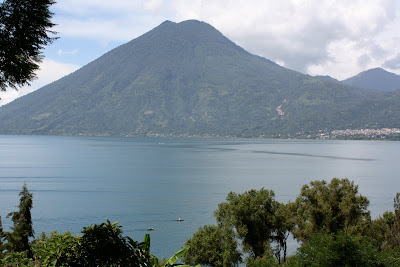

 Not a fan.
Today I sat in the backyard of Indigo to embroider. I sat my little chair next to this huge bush-type-thing that the butterflies liked to swirl around. At first I felt like an intruder. I would embroider a little bit, then watch them. Embroider. Watch. Sit. Embroider. Sit. Watch. Stare. Sit. Embroider. What little legs they have!
They were all doing their own thing. So was I. Then I started to feel like I was blending in, like I was a part of this picture. I started to see this scene as a show - stage left yellow butterfly - stage right striped butterfly - ok now swirl around each other - go! ...
I started to see a rhythm. An inconsistent rhythm. A silent beat. A beat that made no sense, but made so much sense at the same time. And me sitting in my little chair. I was part of this stage. I certainly wasn't the main character, nor was I the audience. But I was a part of. I was a part of this little scene. Me and my little chair, in the backyard.

As I sit here in a café at 7:23 am reflecting on our day yesterday when we were introduced to the ladies of Coban I am emotional. There have been moments here where I have been able to hold back my tears. There have been moments here where I have not. Shoot I think this is one of those moments. Poor café people.I witnessed something so special yesterday. The ladies of Coban came to visit us from their village in Coban to show us their art. They are weavers, these ladies ... but different than other weavers. The women in the village [yes only women, the men are farmers] weave these beautifully delicate and intricate textiles only in white. And when I say delicate/intricate, I mean that their textiles look like lace.These women started weaving when they were children [think: under 10 y/o]. They weave into their textiles symbols of what they see around them - crabs, ducks, deers, spiders ... To say that these textiles take a long time to weave is a total understatement. The weaving takes a very very long time - and because it takes so long the price is high. And because the price is so high, it is very difficult to find these treasured textiles in the world. It pains me to say this, but this art is not sustainable for the ladies. It is a dying art. Unless we can work with the artisans to come up with a sellable solution, while not changing what makes their art so perfect. And these ladies are exactly like the art they create: peaceful, delicate, full of grace. Yesterday I saw God. 


 "Thank you for coming to see my weaving. I came here with my heart. Take it with you, with your heart."


 No arrows needed.
.jpg)


 The total process to make a bag takes about 25 days [!!].
  We arrived at Lake Atitlan yesterday, and started working with the artisans in the villages today. On our boat ride over to San Pedro, Cameron - our guide at that point - was telling us a little bit about the Lake.


